
Introduction
Every artist carries more than brushes, instruments, or tools. They carry memories, pain, doubt, resilience, and hope. Behind every powerful artwork lies a story that rarely appears on the canvas yet silently shapes every stroke. These unseen experiences play a vital role in forming what we recognize as an artist’s voice and perspective.
At the heart of this process lies Artist’s Creative Identity, a deeply personal expression developed through life experiences rather than formal training alone. While talent may initiate creativity, struggle often defines it. Emotional conflicts, personal loss, societal pressure, financial instability, rejection, and inner battles all become catalysts that transform how artists think, feel, and create.
Throughout history, some of the most meaningful art has emerged from hardship. This is not coincidence. Personal struggles in art often push creators to explore deeper emotional spaces, resulting in work that feels authentic and emotionally powerful. Understanding this connection allows us to appreciate art not just as visual beauty, but as lived experience translated into form.
This article explores how challenges influence the artist creative journey and how struggles influence art at emotional, psychological, and stylistic levels. By the end, you will clearly understand how adversity becomes a defining force in shaping Artist’s Creative Identity.
Understanding Artist’s Creative Identity
Artist’s Creative Identity is not a fixed label. It is a living, evolving reflection of an artist’s inner world. It includes creative style, emotional themes, subject choices, symbolism, tone, and the way an artist communicates meaning through their work.
Unlike technical skills that can be taught, creative identity develops through personal interpretation of life. Two artists can experience the same event yet express it completely differently. This difference exists because identity is shaped by emotional processing, belief systems, and personal resilience.
Artist’s Creative Identity forms gradually through:
- Emotional experiences
- Personal values and worldview
- Cultural background
- Trauma and healing
- Success and failure
- Self discovery over time
These factors merge to create a distinct creative fingerprint. This fingerprint becomes recognizable, whether through visual art, music, writing, or performance.
Many artists discover their true identity only after facing adversity. Before struggle, creativity may feel experimental or imitative. After struggle, expression becomes intentional. The art stops asking how it should look and begins asking what it needs to say.
The Emotional Foundation of Creativity
Emotion is the language of art. Without emotion, creativity becomes decoration rather than communication. Personal struggles in art introduce emotional depth that cannot be fabricated artificially.
Pain forces introspection. It makes artists confront uncomfortable truths about themselves and the world. This emotional confrontation often becomes the foundation of authentic creativity.
When artists experience struggle, several internal shifts occur:
- Increased emotional sensitivity
- Heightened self awareness
- Deeper empathy toward others
- Stronger need for expression
- Reduced fear of vulnerability
These changes directly shape Artist’s Creative Identity. Instead of creating for approval, artists begin creating for understanding, healing, or survival.
Many creators describe art as a form of emotional translation. Feelings that cannot be spoken are released visually or symbolically. In this way, struggle does not weaken creativity. It refines it.
Why Struggle Often Precedes Artistic Breakthrough
Struggle disrupts comfort. Comfort rarely inspires transformation. When life becomes unstable, the mind seeks meaning. Art becomes the space where confusion can exist safely.
This is why so many breakthroughs occur during difficult periods. The artist creative journey often intensifies when external stability collapses. During these moments, artists stop creating to impress and start creating to cope.
Artist’s Creative Identity becomes clearer because struggle strips away superficial motivation. What remains is truth.
This is also why art created during hardship often resonates more strongly with audiences. Viewers sense honesty. They feel emotion rather than technique.
Struggle teaches artists to trust emotion over perfection. Over time, this emotional trust becomes central to their creative identity.
Personal Struggles in Art and Their Psychological Impact
Personal struggles in art are not obstacles to creativity. In many cases, they are the very forces that awaken it. When artists face emotional pressure, uncertainty, or loss, their inner world becomes more active. Thoughts intensify, emotions deepen, and the urge to express grows stronger.
Struggle changes how artists observe life. Ordinary moments begin to feel symbolic. Silence becomes meaningful. Small details carry emotional weight. These shifts significantly influence Artist’s Creative Identity because the artist begins interpreting reality through emotion rather than logic.
Psychologists often explain creativity as a response to emotional overload. When feelings exceed what language can contain, the mind searches for alternative outlets. Art becomes that outlet.
This explains why many artists begin their most serious work during periods of heartbreak, isolation, grief, or identity crisis. The artwork becomes both expression and survival.
The Inner Conflict That Fuels Creation
Struggle introduces inner conflict. This conflict becomes a powerful creative engine.
Artists often battle questions such as:
- Who am I becoming
- Why do I feel disconnected
- What is my purpose
- Why does this pain exist
- How can I transform it
These internal questions push artists deeper into exploration. Instead of surface level aesthetics, they begin searching for meaning. This search slowly shapes Artist’s Creative Identity.
Inner conflict also teaches emotional honesty. Artists stop hiding emotions and begin confronting them openly through creative work. Over time, this honesty becomes their signature.
Common Types of Personal Struggles in Art
Every artist’s experience is unique, but certain struggles repeatedly appear across creative lives. Each type contributes differently to the artist creative journey.
Below is a detailed table showing how different struggles influence artistic development.
Table: Types of Personal Struggles and Their Creative Impact
| Type of Struggle | Emotional Effect | Creative Influence | Impact on Artist’s Creative Identity |
|---|---|---|---|
| Emotional trauma | Deep emotional sensitivity | Raw expressive themes | Strong emotional authenticity |
| Financial instability | Anxiety and uncertainty | Resourceful creativity | Grit and resilience driven identity |
| Rejection or criticism | Self doubt | Stronger personal voice | Independent artistic direction |
| Identity confusion | Inner questioning | Symbolic exploration | Unique conceptual style |
| Loneliness | Isolation | Introspective artwork | Deep emotional intimacy |
| Social pressure | Creative conflict | Rebellion through art | Distinct non conformist identity |
| Failure or burnout | Mental exhaustion | Reinvention phase | Mature evolved creative voice |
This table highlights one truth. Struggles do not damage creativity. They shape it.
Each difficulty leaves a psychological imprint that slowly integrates into Artist’s Creative Identity.
How Emotional Pain Alters Artistic Perception
Pain changes perception. Artists experiencing hardship often notice details others ignore. A shadow feels heavier. A color feels louder. A melody feels heavier.
This heightened perception allows artists to create work that feels emotionally layered. The audience does not simply see the artwork. They feel it.
This emotional layering becomes a defining element of Artist’s Creative Identity.
Pain also removes creative fear. When someone has already experienced emotional loss, fear of judgment becomes less powerful. This freedom allows experimentation and risk taking.
Many artists report that after major struggle, they stop seeking perfection and start seeking truth. That shift permanently changes their creative direction.
The Role of Vulnerability in the Artist Creative Journey
Vulnerability is uncomfortable, yet it is essential. Without vulnerability, art remains distant. With vulnerability, art becomes human.
Personal struggles in art force vulnerability. Artists can no longer hide behind technique alone. They must reveal emotion.
This vulnerability strengthens connection with audiences. People resonate with honesty far more than perfection. When viewers sense authenticity, they engage deeply.
Over time, vulnerability becomes part of Artist’s Creative Identity. The artist becomes known not just for visuals, but for emotional courage.
Why Some Artists Create Their Best Work During Hard Times
Hard times remove distractions. When external life becomes chaotic, artists often turn inward. This inward focus intensifies creativity.
During hardship:
- Emotional intensity increases
- Reflection deepens
- Expression becomes urgent
- Creativity feels necessary rather than optional
Art stops being a hobby and becomes a language.
This urgency pushes artists beyond comfort zones. They experiment with new forms, themes, and approaches. These experiments often define long term artistic identity.
Artist’s Creative Identity emerges most clearly when art becomes a need rather than a choice.
The Artist Creative Journey Through Transformation
The artist creative journey is rarely linear. It moves through confusion, discovery, collapse, rebuilding, and renewal. Personal struggles often act as turning points within this journey. Before struggle, artists may create instinctively. After struggle, they create intentionally.
Struggle introduces transformation. It changes not only what an artist creates, but why they create.
This transformation marks a powerful shift in Artist’s Creative Identity. The work begins to carry emotional memory. Every piece becomes part of an ongoing conversation between the artist and their experiences.
During difficult periods, artists often enter a phase of questioning. They reassess their values, goals, and creative direction. This reassessment leads to deeper clarity.
Rather than imitating trends, artists begin honoring their own truth.
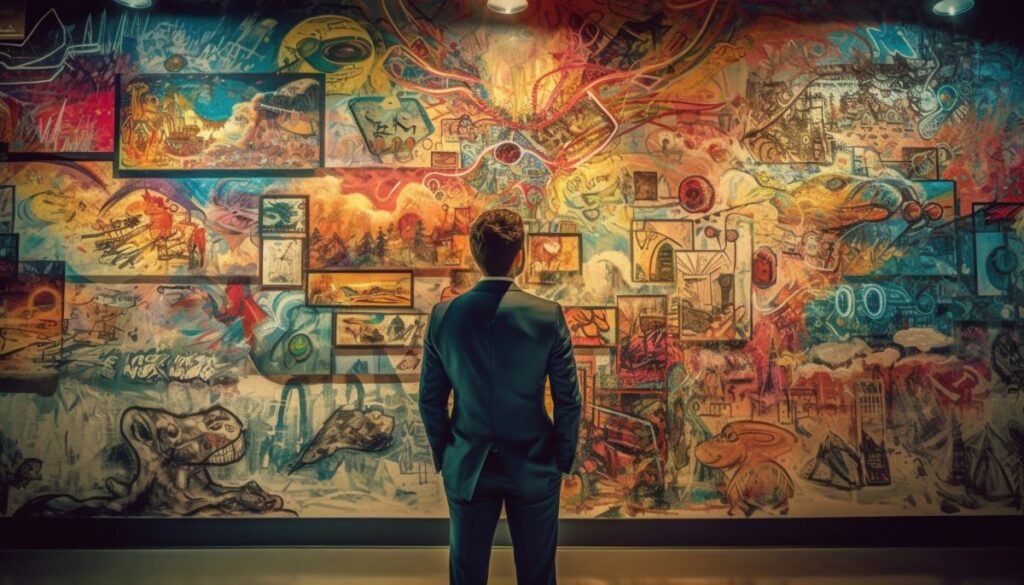
How Struggles Influence Art Style and Expression
How struggles influence art becomes visible through noticeable changes in style. Emotional pressure reshapes artistic choices both consciously and unconsciously.
Common stylistic shifts include:
- Darker or more muted color palettes
- Rougher textures and imperfect lines
- Symbolic or abstract imagery
- Repetitive motifs tied to memory
- Minimalist expression during emotional exhaustion
These shifts reflect inner states rather than technical preference. Over time, such patterns become consistent, forming recognizable traits within Artist’s Creative Identity.
For example, an artist experiencing grief may naturally gravitate toward subdued tones. Someone navigating identity confusion may explore fragmented forms. These stylistic decisions are emotional responses rather than design strategies.
Symbolism as Emotional Language
When emotions become too complex for direct expression, symbolism emerges.
Symbols allow artists to communicate indirectly while protecting emotional vulnerability. This symbolic language becomes deeply personal and unique.
Common symbolic elements include:
- Doors representing transition
- Water symbolizing emotional depth
- Broken forms indicating inner conflict
- Light representing healing or hope
- Repetition reflecting unresolved emotions
As these symbols reappear, they form part of Artist’s Creative Identity. Over time, audiences begin associating certain imagery with the artist’s emotional voice.
Symbolism allows pain to become poetry.
Identity Shifts After Major Life Challenges
Major struggles often divide an artist’s career into before and after phases.
Before struggle, art may focus on aesthetics, experimentation, or imitation. After struggle, art becomes grounded in meaning.
This shift is not intentional at first. It emerges naturally through emotional processing.
Artists often report feeling disconnected from their earlier work after undergoing significant hardship. This happens because Artist’s Creative Identity has evolved.
Growth demands change.
What once felt expressive may now feel shallow. This realization pushes artists toward deeper storytelling and authenticity.
Emotional Memory Embedded in Art
Every emotional experience leaves a psychological imprint. Artists translate these imprints into form.
Even years later, certain themes resurface unconsciously. These recurring elements are signs of unresolved or integrated emotional memory.
Artist’s Creative Identity becomes a living archive of emotional history.
This is why long term followers can recognize an artist’s work instantly. The emotional rhythm remains consistent even as technique evolves.
Art becomes continuity in a changing life.
Personal Struggles in Art and Creative Authenticity
Authenticity cannot be manufactured. It emerges when artists stop performing and start expressing.
Personal struggles in art remove the need for performance. Pain has no interest in aesthetics. It demands honesty.
Through this honesty, artists discover their true voice.
This voice becomes the foundation of Artist’s Creative Identity. It reflects lived experience rather than borrowed inspiration.
Authentic art resonates because it mirrors human emotion. Viewers may not know the artist’s story, but they feel its truth.
How Struggles Build Creative Confidence
Ironically, struggle often strengthens confidence.
When artists survive emotional hardship, creative fear loses power. Rejection feels smaller. Criticism feels manageable. Risk becomes acceptable.
This emotional resilience encourages bold expression.
Artists begin experimenting freely, trusting intuition over approval. This freedom sharpens their identity.
Artist’s Creative Identity becomes grounded not in validation but in self trust.
The Relationship Between Healing and Creativity
As artists heal, their work evolves again. Healing does not erase struggle. It reframes it.
During healing phases:
- Art becomes more reflective
- Themes shift from pain to understanding
- Expression softens without losing depth
- Meaning becomes clearer
Healing integrates struggle into identity rather than letting it dominate.
Artist’s Creative Identity matures during this stage. The artist learns to create from wisdom rather than wound.
This evolution often marks the most refined phase of an artist’s career.
Conclusion
The path of creativity is rarely smooth, and that is precisely what makes it meaningful. Personal struggles are not interruptions in an artist’s life. They are defining moments that shape perception, emotion, and expression. Through hardship, artists gain depth, awareness, and authenticity that cannot be taught or replicated.
Throughout the artist creative journey, challenges act as mirrors. They reflect inner truths that might otherwise remain hidden. These truths gradually form Artist’s Creative Identity, giving the work emotional weight and personal direction. What begins as pain transforms into insight, and what once felt overwhelming becomes a source of creative clarity.
Personal struggles in art teach artists to see beyond surface beauty. They encourage honesty, vulnerability, and courage. As artists confront loss, rejection, uncertainty, or self doubt, their creative voice strengthens. The struggle itself becomes part of the narrative, influencing themes, styles, symbolism, and emotional tone.
Understanding how struggles influence art allows us to appreciate creativity on a deeper level. Art is not merely produced. It is lived, felt, and survived. Every line, color, and composition carries memory. Every piece becomes a conversation between experience and expression.
Ultimately, Artist’s Creative Identity is not shaped by comfort but by resilience. It evolves through reflection, healing, and growth. When artists embrace their struggles rather than hide from them, creativity transforms into purpose. In that transformation, art becomes more than expression. It becomes identity itself.
Frequently Asked Questions
What is Artist’s Creative Identity?
Artist’s Creative Identity refers to the unique emotional, stylistic, and conceptual fingerprint that defines an artist’s work. It is shaped by personal experiences, struggles, belief systems, and creative decisions over time. Rather than being purely technical, it reflects an artist’s inner world and evolving expression.
How do personal struggles in art shape an artist’s style?
Personal struggles in art influence creativity by deepening emotional perception and encouraging authentic expression. When artists face emotional challenges, they often shift toward themes of introspection, symbolism, and vulnerability. These experiences expand their emotional range and directly shape the motifs, colors, and subjects they choose to explore.
Why does hardship often lead to stronger creativity?
Hardship heightens emotional awareness and strips away superficial motivations. When comfort is disrupted, artists tend to explore deeper meanings and communicate more honestly. This push toward vulnerability strengthens the artist creative journey and becomes a defining influence on Artist’s Creative Identity.
Can Artist’s Creative Identity change over time?
Yes. Artist’s Creative Identity evolves through ongoing life experiences, including both triumphs and struggles. As artists learn, heal, and grow, their creative focus and expression adapt. This evolution can be seen through changes in themes, style, and creative purpose.
How do artists use past trauma in their artwork?
Artists often translate past trauma into visual symbols or themes rather than literal narratives. By using metaphorical elements, colors, and forms, they give shape to emotional experiences. This process turns personal history into visual language, helping audiences connect with the work emotionally.
Does every artist go through struggle?
Not every artist experiences the same type or intensity of hardship, but most go through some form of challenge that impacts how they see the world. These challenges contribute to the depth and authenticity of their work and help shape their Artist’s Creative Identity.
How does struggle affect artistic themes and symbolism?
When artists face emotional difficulty, they tend to gravitate toward themes that reflect inner states — memory, loss, identity, conflict, or transformation. Symbolism emerges as a way to communicate complex emotions, helping audiences interpret layered meaning beneath surface aesthetics.
Can exploring characters help in understanding Artist’s Creative Identity?
Yes. Exploring fictional or symbolic characters in art can reveal aspects of an artist’s emotional world. For example, characters that embody humor, tragedy, or contradiction — like the artistic clown — can serve as metaphors for the artist’s own inner conflict and emotional evolution. Learn more about creative symbolism through characters here:
https://www.svelted.com/artistic-clown/
How does healing influence the artist creative journey?
Healing allows artists to integrate struggle into identity without letting it dominate their work. During healing phases, creative expression often becomes more reflective, purposeful, and emotionally balanced. This transition marks a mature stage in the development of Artist’s Creative Identity.
Why do audiences resonate with work created from struggle?
Art that emerges from struggle feels genuine because it carries lived emotion. Viewers connect with honesty more deeply than technical perfection, and they often find personal meaning in works that reflect shared emotional experiences.