
Introduction
The clown has existed for centuries, yet its meaning has constantly evolved. Once viewed simply as a comic entertainer, the clown has transformed into a powerful artistic symbol that represents human emotion, contradiction and vulnerability. Today, the idea of the Artistic Clown goes far beyond laughter. It explores sadness, hope, absurdity and the fragile balance between joy and despair.
Unlike the circus performer whose primary role is amusement, the Artistic Clown belongs to the world of visual art, theatre, painting and performance expression. This figure is neither fully comedic nor entirely tragic. Instead, it lives in a unique emotional space that reflects the complexities of human life.
Understanding the Artistic Clown allows us to better appreciate how artists use exaggerated characters to express truth, criticism and emotional depth. This article explores the history, symbolism, psychology and artistic importance of the Artistic Clown in both traditional and modern creative culture.
The Origins of the Artistic Clown
The concept of the clown can be traced back to ancient civilizations. Early societies often used fools or jesters as symbolic figures who could speak uncomfortable truths under the protection of humor.
In medieval courts, jesters were allowed to mock kings, question authority and expose hypocrisy. Over time, this social role evolved into something deeper and more expressive.
The Artistic Clown emerged when artists began using clown figures not merely for performance but for emotional storytelling.
Historical influences
| Era | Contribution to Artistic Clown |
|---|---|
| Ancient Greece | Comic masks expressing emotion |
| Medieval Europe | Court jesters with social commentary |
| Italian Commedia dell’arte | Structured clown archetypes |
| Nineteenth century | Circus clowns gain visual identity |
| Modern art era | Clown becomes symbolic figure |
These influences shaped the Artistic Clown into a character capable of carrying both joy and sorrow simultaneously.

What Defines an Artistic Clown
An Artistic Clown is not defined by jokes or tricks. Instead, it is defined by emotional contrast.
This character often appears:
- Thoughtful rather than funny
- Expressive rather than loud
- Symbolic rather than literal
The Artistic Clown invites the viewer to feel rather than laugh.
Key characteristics
| Trait | Meaning |
|---|---|
| Exaggerated makeup | Emotional masking |
| Soft expressions | Hidden vulnerability |
| Isolated posture | Loneliness |
| Color contrast | Joy versus sadness |
| Silent presence | Emotional depth |
Through these features, the Artistic Clown becomes a mirror of the human condition.
The Artistic Clown as a Symbol of Humanity
One of the reasons the Artistic Clown resonates so deeply is because it represents the contradictions humans live with every day.
People often present happiness publicly while experiencing emotional struggle privately. The clown’s painted smile reflects this reality perfectly.
The Artistic Clown symbolizes:
- Emotional duality
- Social performance
- Inner conflict
- Hope hidden beneath sorrow
Artists use this figure to communicate that happiness is often performed while pain remains unseen.

Artistic Clown in Painting and Visual Art
Painters have long been fascinated by clowns because of their expressive potential. The face paint allows exaggerated emotion while still maintaining realism.
Many famous artists explored clown imagery to express personal struggles.
Why painters use the Artistic Clown
- Allows emotional storytelling without realism constraints
- Creates strong visual contrast
- Communicates mood instantly
- Encourages viewer empathy
The Artistic Clown appears frequently in modern figurative art and contemporary portrait painting.
Emotional Layers of the Artistic Clown
The power of the Artistic Clown lies in layers.
At first glance, the viewer sees bright colors and playful costume. On closer inspection, sadness, fatigue or longing emerges.
This layered emotion creates depth that ordinary portraiture sometimes cannot achieve.
Emotional interpretation table
| Visual Element | Emotional Meaning |
|---|---|
| Smiling mouth | Social expectation |
| Tired eyes | Emotional truth |
| Faded costume | Loss of innocence |
| Shadowed background | Isolation |
| Still posture | Reflection |
The Artistic Clown becomes a storytelling device rather than a character.
The Artistic Clown in Theatre and Performance
Beyond painting, the Artistic Clown plays a powerful role in theatrical expression.
Modern theatre often uses clown techniques to explore serious themes such as loss, identity and social pressure.
Unlike comedy theatre, the Artistic Clown in performance often speaks very little. Silence becomes part of the storytelling.
Physical movement, pauses and facial expression replace dialogue.
This allows audiences to project their own emotions onto the character.
Psychological Meaning of the Artistic Clown
Psychologically, the Artistic Clown reflects the concept of the mask.
Humans wear emotional masks daily to function in society. The clown’s makeup exaggerates this truth visually.
The Artistic Clown represents:
- Emotional suppression
- Fear of vulnerability
- Desire for acceptance
- Conflict between inner and outer self
This psychological depth is why clown imagery often feels haunting rather than humorous.
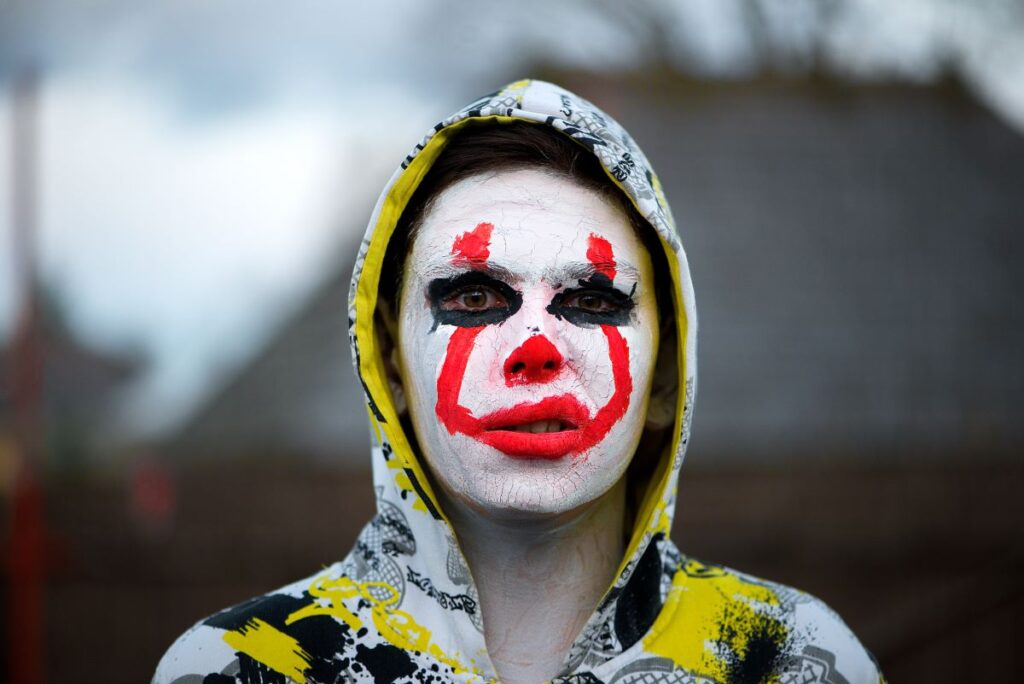
Artistic Clown in Modern Culture
In modern art and digital media, the Artistic Clown continues to evolve.
Artists now use clown imagery to explore themes such as:
- Mental health awareness
- Social isolation
- Performance culture
- Online identity
The Artistic Clown has become especially relevant in an age where people curate happiness on social platforms while hiding personal struggles.
This makes the figure more powerful today than ever before.
Differences Between Comic Clown and Artistic Clown
| Comic Clown | Artistic Clown |
|---|---|
| Focus on laughter | Focus on emotion |
| Entertainment driven | Meaning driven |
| Loud behavior | Quiet expression |
| Audience reaction | Audience reflection |
| Temporary joy | Lasting impression |
Understanding this difference helps viewers appreciate the artistic depth behind clown imagery.
Why Artists Are Drawn to the Artistic Clown
Artists often turn to the Artistic Clown during periods of personal transformation or emotional exploration.
The character provides safety. Artists can express pain without revealing themselves directly.
Through the clown, emotions become symbolic rather than confessional.
This emotional distance allows honesty.
The Artistic Clown in Contemporary Art Galleries
Today, galleries increasingly feature clown themed artworks that emphasize vulnerability rather than comedy.
Collectors are drawn to these pieces because they evoke empathy and introspection.
The Artistic Clown invites viewers to slow down and feel rather than consume art quickly.
Conclusion
The Artistic Clown is far more than a humorous figure. It is an emotional language that artists use to explore humanity itself. Existing between joy and sorrow, performance and truth, the Artistic Clown captures the contradictions that define human life.
Through painting, theatre and modern expression, this symbolic figure continues to evolve. It reminds us that behind every smile may exist struggle, reflection or hope waiting to be seen.
In a world increasingly driven by appearances, the Artistic Clown remains deeply relevant. It invites honesty, empathy and emotional connection. More than humor and less than tragedy, it stands as one of the most powerful symbols in artistic storytelling.
Frequently Asked Questions
1. What is the Artistic Clown and why is it significant in art?
The Artistic Clown is a symbolic figure in visual art, theatre, and performance that represents complex human emotions. Unlike a traditional comic clown, it conveys vulnerability, hope, and introspection. Artists use the Artistic Clown to explore emotional duality and social performance, making it a powerful tool for storytelling and audience reflection.
2. How does the Artistic Clown differ from a comic clown?
A comic clown focuses primarily on laughter and entertainment, while the Artistic Clown emphasizes emotional depth, subtle expression, and symbolic meaning. Where a comic clown elicits temporary joy, an Artistic Clown encourages empathy and introspection.
3. How can I learn more about classic influences in artistic expression?
Artistic Clown imagery draws inspiration from historical and literary traditions. For a deeper understanding of classical influences in creative work, check out this insightful guide on classic books and their relevance today: Importance of Classic Books Today.
4. Where can I find practical tips for creative collaboration in the arts?
Many artists collaborate remotely or in cross-disciplinary teams. To learn more about managing creative teams effectively, including applying artistic principles like those in the Artistic Clown, visit this guide: The Ultimate Guide to Managing Remote Film Production Teams.
5. Why do artists continue to explore the Artistic Clown today?
Modern artists are drawn to the Artistic Clown because it reflects contemporary issues such as mental health, social performance, and emotional authenticity. Its balance between humor and subtle tragedy resonates with audiences who experience complex emotions in their daily lives.
6. How can I incorporate the Artistic Clown into my own art projects?
To use the Artistic Clown effectively, focus on emotional contrast, subtle expressions, and symbolic gestures. Avoid making it purely comedic or grotesque; instead, explore layers of feeling that invite empathy and reflection.